What Is a BLACKHOLE?
A BLACKHOLE is one of the most fascinating and extreme objects in the universe. It is a region of space where gravity is so strong that nothing—not even light—can escape once it crosses a certain boundary. This boundary is known as the event horizon.
Unlike planets or stars, a BLACKHOLE cannot be seen directly. Scientists know it exists by observing its effects on nearby stars, gas, and light. When matter falls toward a BLACKHOLE, it heats up, spins rapidly, and emits powerful radiation before disappearing forever.
What makes a BLACKHOLE truly remarkable is that it bends space and time themselves, confirming predictions made by Einstein’s theory of relativity. In simple terms, a BLACKHOLE is nature’s most powerful gravity trap.
Can Time Travel Ever Be Possible? What Science Says in 2026
How a BLACKHOLE Is Formed
Death of a Massive Star
Most BLACKHOLEs are born when a very massive star runs out of fuel. Without energy to resist gravity, the star collapses under its own weight.
Collapse and Singularity
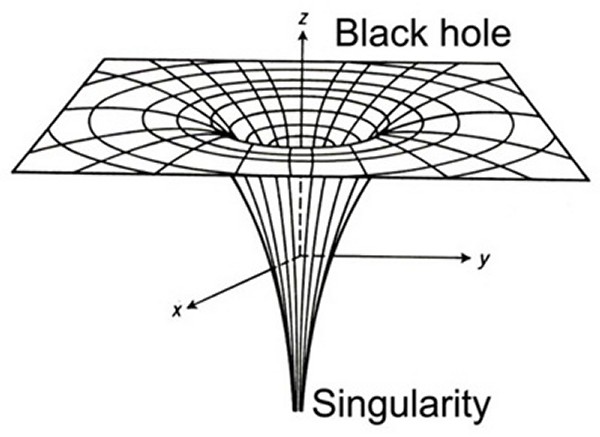
If the remaining core is heavy enough, it collapses infinitely into a single point called a singularity, where density becomes infinite. This collapse creates a BLACKHOLE.
Types of BLACKHOLE
Stellar BLACKHOLE
Formed from collapsing stars
Mass: 5–100 times the Sun
Supermassive BLACKHOLE
Found at galaxy centers
Mass: millions or billions of Suns
Intermediate BLACKHOLE
Rare and still being studied
Between stellar and supermassive size
Primordial BLACKHOLE
Hypothetical
Anatomy of a BLACKHOLE
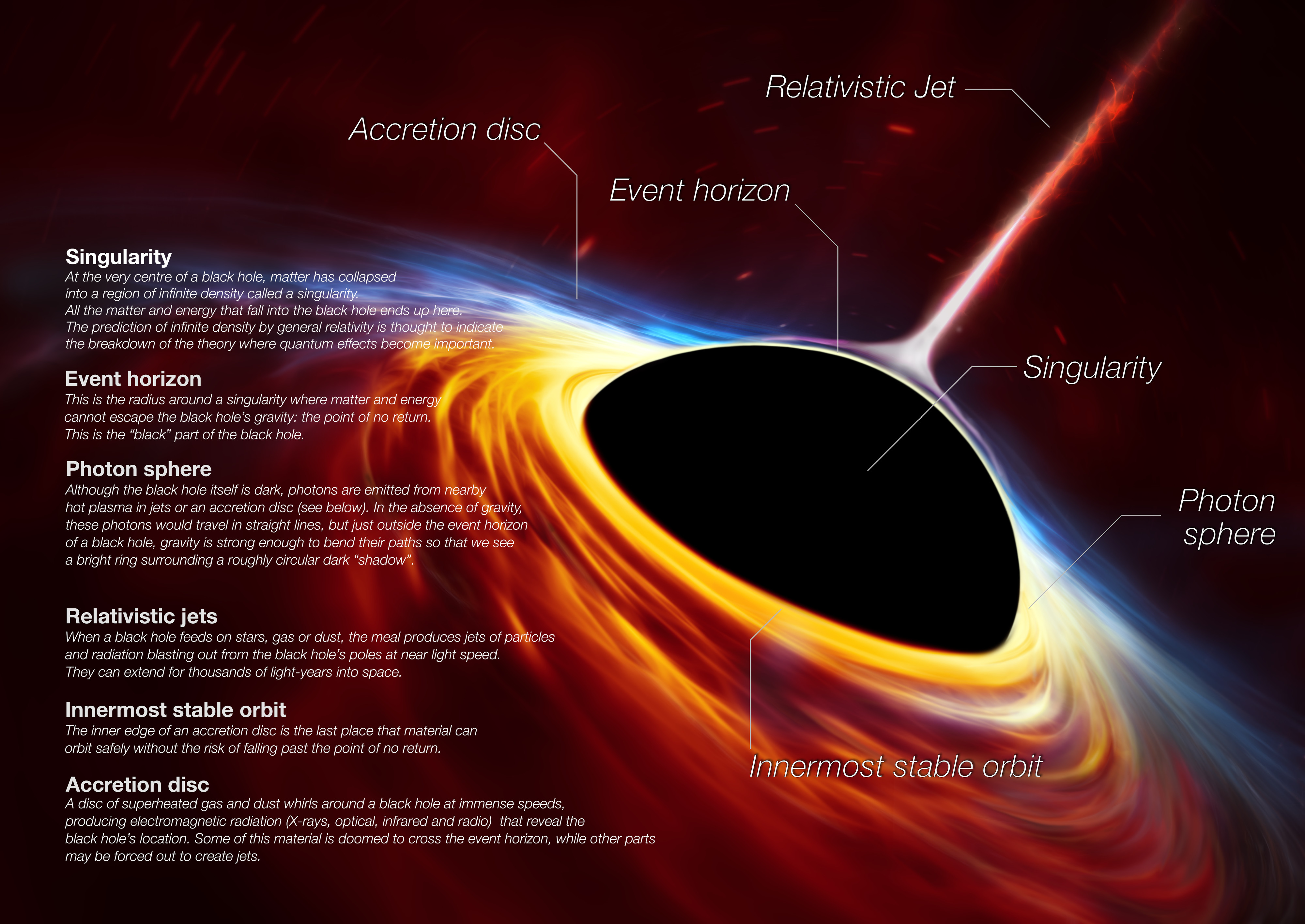


Event Horizon
The “point of no return.” Once crossed, escape is impossible.
Singularity
The BLACKHOLE’s core, where physics as we know it breaks down.
Accretion Disk
A glowing ring of superheated matter spinning around the BLACKHOLE.
What Happens Inside a BLACKHOLE?
Inside a BLACKHOLE, gravity stretches objects like spaghetti—a process called spaghettification. Time slows down near the event horizon, meaning an outside observer would never see you fully fall in.
What happens beyond the singularity remains unknown. Current physics cannot yet explain it.
Can a BLACKHOLE Destroy Earth?
Thankfully, no. There is no BLACKHOLE close enough to threaten Earth. Even if the Sun were replaced by a BLACKHOLE of equal mass, Earth would continue orbiting normally—just without sunlight.
BLACKHOLE vs Star vs Neutron Star
| Feature | Star | Neutron Star | BLACKHOLE |
|---|---|---|---|
| Gravity | Moderate | Extreme | Infinite |
| Visibility | Bright | Dim | Invisible |
| Escape Possible | Yes | Yes (barely) | No |
How Scientists Detect a BLACKHOLE
Scientists detect a BLACKHOLE by:
Observing stars orbiting invisible objects
Why BLACKHOLE Research Matters
Studying a BLACKHOLE helps scientists:
Understand gravity and spacetime
Test Einstein’s theories
Explore the origin of galaxies
Unlock clues about the universe’s beginning
BLACKHOLE research pushes science to its limits.
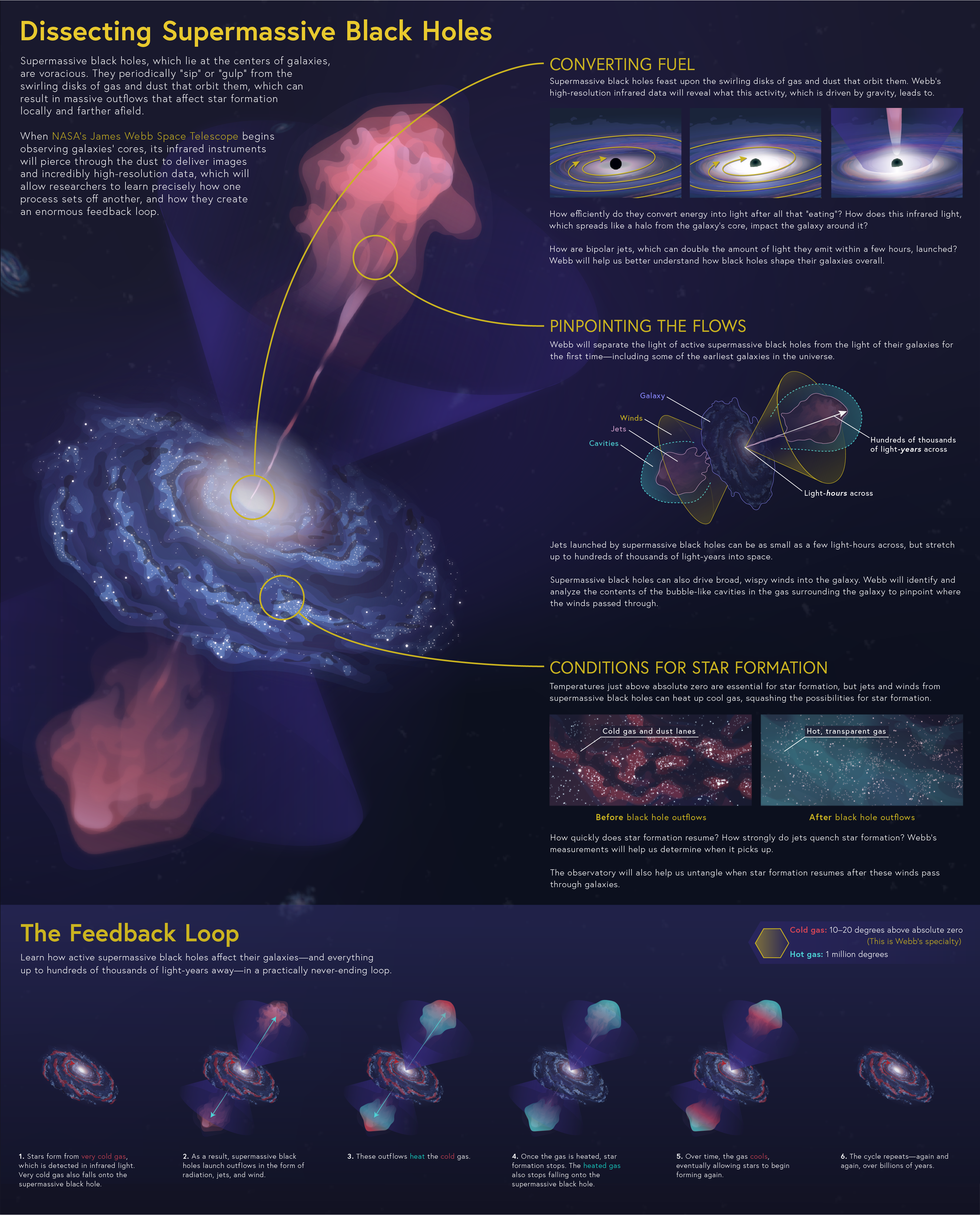
Infographics & Custom Visual Concepts


Frequently Asked Questions (FAQs)
1. Is a BLACKHOLE really empty?
No. It contains enormous mass compressed into a tiny space.
2. Can light escape a BLACKHOLE?
No. Once past the event horizon, light cannot escape.
3. Are BLACKHOLEs dangerous?
Only if you are extremely close, which Earth is not.
4. Do BLACKHOLEs live forever?
They slowly evaporate through Hawking radiation.
5. Can time travel happen near a BLACKHOLE?
Time slows down, but true time travel is theoretical.
6. How big can a BLACKHOLE get?
Some are billions of times more massive than the Sun.
Conclusion
A BLACKHOLE is not just a cosmic monster—it is a gateway to understanding the deepest laws of the universe. From bending time to shaping galaxies, the BLACKHOLE remains one of science’s greatest mysteries and most powerful teachers.


Comments
Post a Comment